
Find Unclaimed Money in Baltimore
Baltimore residents have two separate systems to check when searching for unclaimed money: the statewide Maryland Comptroller database and Baltimore City's own tax sale excess funds program. Baltimore is an independent city, not part of Baltimore County, and it runs programs that hold millions of dollars owed to former property owners across the city. Searching both sources is the only way to make sure nothing is missed.
Baltimore Unclaimed Money Overview
Baltimore Unclaimed Money: State Database
The Maryland Comptroller holds unclaimed money from bank accounts, insurance policies, utility deposits, payroll checks, and other financial assets. Maryland never cancels your right to claim. There is no deadline. The state holds the funds indefinitely under Maryland Commercial Law Article §17-101, which defines what counts as abandoned property. If you have ever lived or worked in Baltimore, there may be money waiting for you.
The search tool is at claimitmd.gov. You can also check MissingMoney.com, which pulls from multiple state databases at once. Search under every name you have used, including maiden names, business names, and joint account names. Many people find money from employers, old banks, or insurance companies they had decades ago. The average claim in Maryland is around $2,080, but some accounts are worth much more.
The main portal is marylandtaxes.gov/unclaimed-property. That page explains what types of property are covered, how dormancy works, and what you need to file a claim.
The screenshot below shows the Maryland Comptroller's unclaimed property portal where Baltimore residents can start their search.
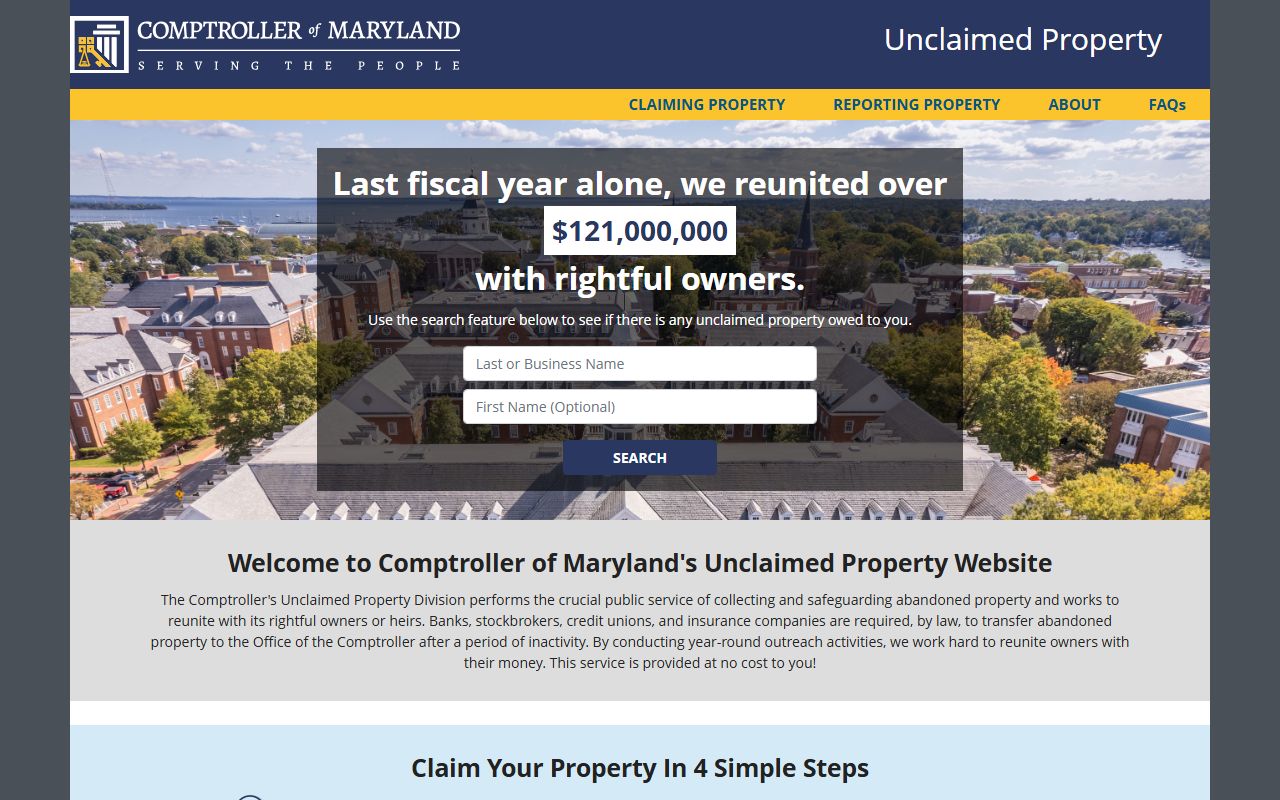
The portal lets you search by name and then file a claim directly online if you find a match.
Baltimore City Tax Sale Excess Funds
This is where Baltimore stands apart from every other Maryland city. When Baltimore City sells a property at tax sale and the auction price exceeds the amount of back taxes owed, the difference goes into an excess funds account. That money belongs to the former property owner. Right now, Baltimore City holds more than $6 million in these excess funds for over 2,100 former owners. About $2.3 million of that has been sitting untouched since 2016. The median time funds have sat unclaimed is nearly 10 years.
Fifty-five former owners are each owed $20,000 or more. Several are owed over $80,000. Despite this, Baltimore City has paid out funds to only about 180 owners since 2020. The city does not send active outreach letters to former owners. The only way to find out if you are owed money is to check the Excess Funds List yourself at bidbaltimore.com.
The screenshot below shows the BidBaltimore auction platform where the excess funds list can be found.
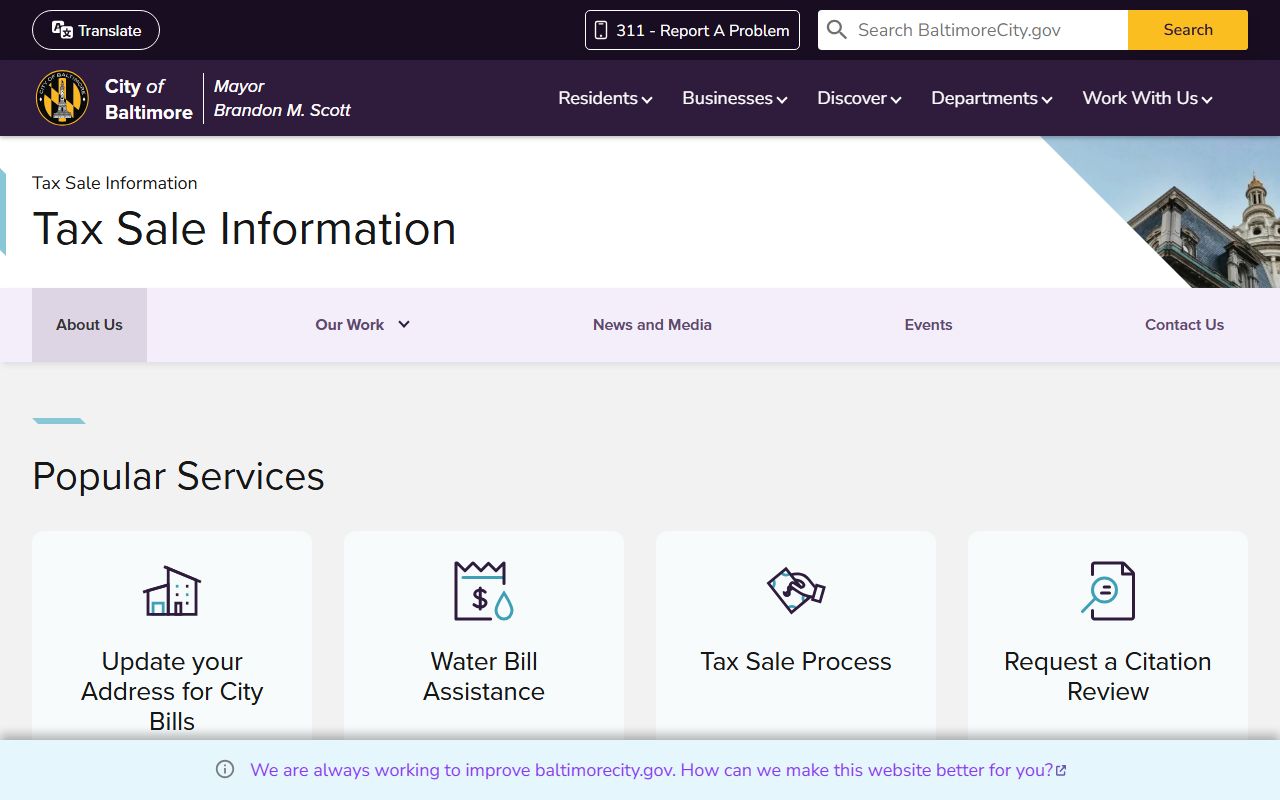
The list does not include instructions for how to claim. You need to contact the Tax Sale Office directly to start the process.
Note: $4.8 million of the total excess funds, about 80%, is owed to people in majority-Black census tracts across Baltimore.
How to Claim Baltimore Tax Sale Excess Funds
The process to claim excess funds from Baltimore City is more involved than a standard state unclaimed property claim. You must submit a notarized affidavit that includes three things: a statement that you are the former owner of the property, an agreement to indemnify and hold harmless the City of Baltimore, and confirmation that you searched the Circuit Court docket and found no active legal action filed against the property. You can check the court docket at casesearch.courts.state.md.us.
You also need a government-issued photo ID. If the former owner has died, you will need letters of administration and a death certificate. If you are acting as a representative for someone else, you need a limited power of attorney along with a notarized affidavit of verification.
Mail everything to: Delinquent Accounts-Tax Sale, 200 Holliday Street, Room 1, Baltimore, MD 21202. You can also call the Tax Sale Office at 410-396-3987 or email taxsale@baltimorecity.gov with questions. For tax sale services specifically, contact Coordinator Michael O'Leary at 410-396-3483 or taxsaleservices@baltimorecity.gov.
The screenshot below shows the official Baltimore City Tax Sale information page where annual auction schedules and related notices are posted.
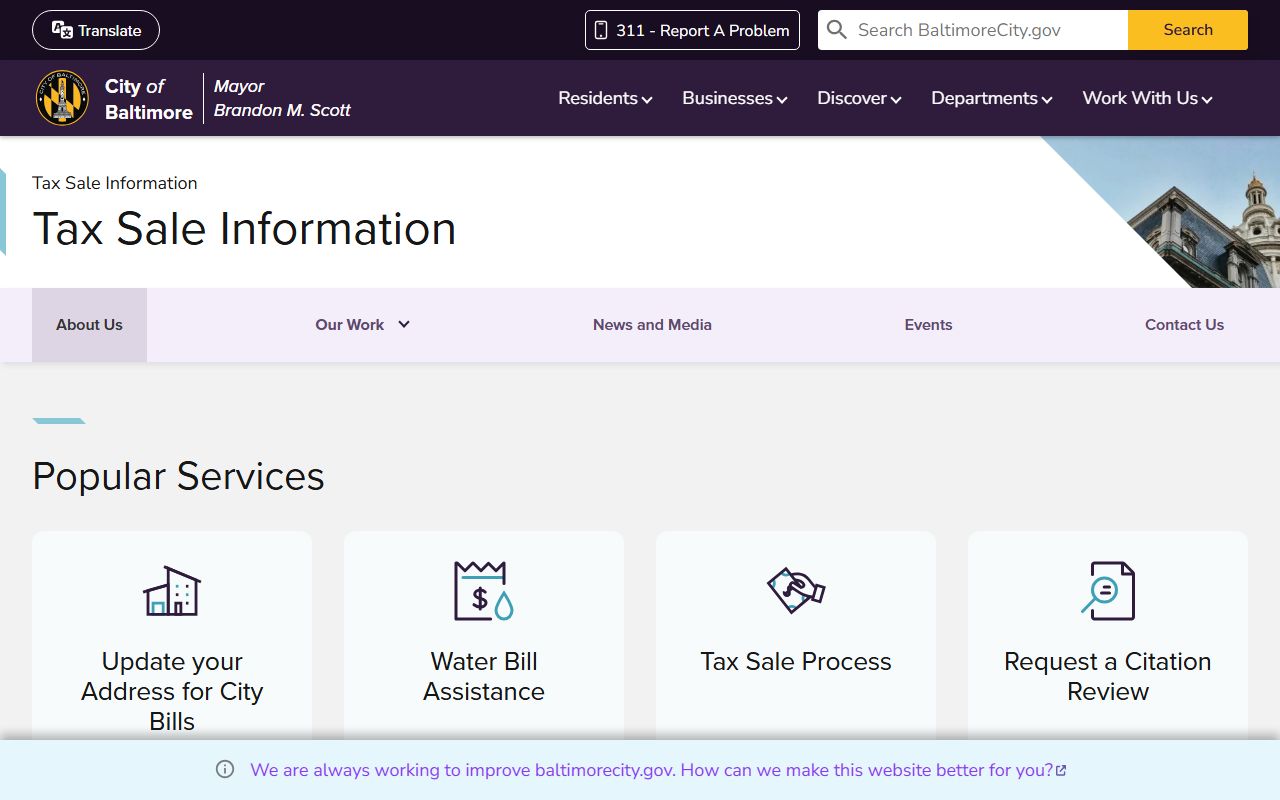
The tax sale timeline runs from February through mid-May each year, with the final payment deadline on April 30.
Baltimore City Tax Sale Exemption and Assistance Programs
If you are worried about losing your home to tax sale, Baltimore City has a Tax Sale Exemption Program that sets aside $2 million each year to help owner-occupants. The program opens February 15. You can apply at dhcd.baltimorecity.gov/tax-sale-exemption-program. Do not wait until close to the April 30 deadline to apply. Funds can run out.
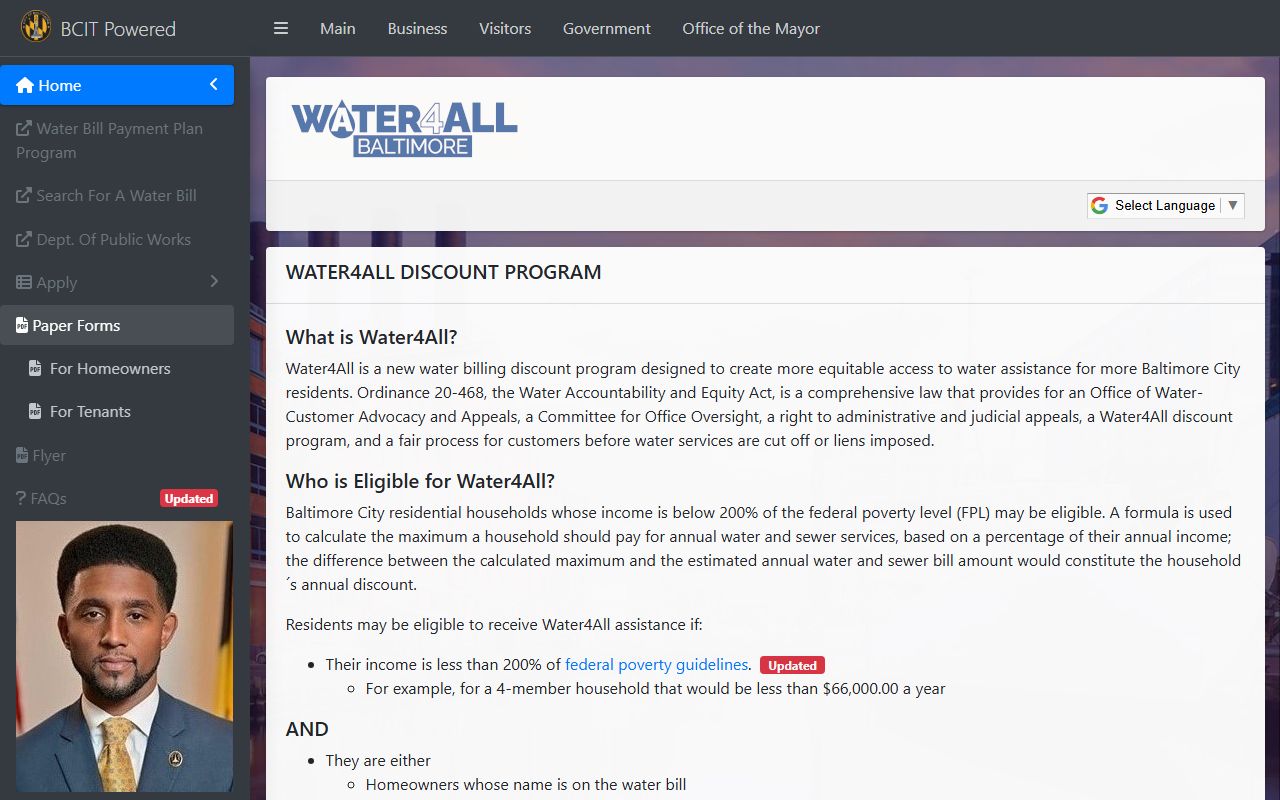
The Water4All Assistance Program helps Baltimore residents who are struggling to pay water bills, which can become a lien on a property and eventually contribute to tax sale risk. Call 410-396-5555 or visit the program at cityservices.baltimorecity.gov/Water4All. The program is open to residents below 200% of the federal poverty guidelines.
The Homestead Property Tax Credit limits how fast your assessed value can rise each year. Baltimore City caps the increase at 4%. Apply at sdathtc.dat.maryland.gov or call 410-767-2165. This credit can save hundreds of dollars annually and reduce the chance of falling behind on taxes.
The screenshot below shows the Water4All program page for Baltimore residents seeking utility assistance linked to property tax stability.
Free legal help is also available through Maryland Volunteer Lawyers Service and the Stop Oppressive Seizures Fund for Baltimore residents facing tax sale issues.
Other Baltimore Unclaimed Property Sources
The Baltimore Police Department's Evidence Management Unit holds unclaimed property turned in or seized during investigations. Items are held for a set time before disposal. If you believe personal property was taken into police custody and never returned, contact the Evidence Management Unit at 410-396-2048 or email EvidenceSubmissions@baltimorepolice.org. The unit is located at Baltimore Police Headquarters, 601 E. Fayette Street, Baltimore, MD 21202. Hours are Monday through Friday, 9:00 a.m. to 3:00 p.m. by appointment.
Under Maryland Commercial Law Article §17-301, holders of unclaimed property must report and remit those funds to the state. This covers businesses operating in Baltimore, banks, insurance companies, and other financial institutions. If any of these held an account or asset in your name, it should now be in the state system. Check claimitmd.gov first.
Note: Baltimore City is an independent city and is NOT part of Baltimore County. The two are separate government entities. For Baltimore County-specific resources, see the Baltimore County page.
How to File a State Unclaimed Property Claim from Baltimore
Once you find a match in the state database, the online claim process is straightforward. You need a photo ID, proof of your Social Security number, and in some cases the completed COT-ST912 claim form. The form is available at marylandcomptroller.gov. Online claims typically process in 6 to 12 weeks. Mail claims take 12 to 24 weeks.
For questions about a state claim, call the Comptroller's office at 410-767-1700 or toll-free at 1-800-782-7383. Email is unclaim@marylandtaxes.gov. Staff are available Monday through Friday, 8:30 a.m. to 4:30 p.m. You can also write to 7 St. Paul Street, Suite 320, Baltimore, MD 21202. The office is open to walk-in visits during business hours.
The screenshot below shows the state claim search database where you can look up accounts by name.

The search is free and takes only a few minutes to run through all the name variations you want to check.
Under Maryland Commercial Law Article §17-401, the state must pay back the full value of the property when you claim it. You do not lose anything by waiting, but there is no reason to delay either.
Nearby Cities
Residents in surrounding areas can also search for unclaimed money. Check pages for nearby communities below.