
Allegany County Unclaimed Money Search
Residents of Allegany County may have unclaimed money sitting with the Maryland Comptroller right now. Bank accounts, insurance payouts, forgotten wages, and utility deposits are among the most common sources. The state holds over $2.76 billion in total unclaimed funds, and many of those accounts belong to people in Cumberland and the surrounding Appalachian communities of western Maryland. You can search and file a claim at no cost through the state's official portal.
Allegany County Unclaimed Money Overview
How Allegany County Unclaimed Money Works
Maryland law requires businesses, banks, and other holders to turn over dormant accounts to the state after a set period of inactivity. Under Maryland Code §17-102, property is presumed abandoned after three years of dormancy for most bank accounts, wages, and insurance proceeds. Money orders go dormant after seven years, and traveler's checks after fifteen. Once turned over, the Maryland Comptroller holds those funds indefinitely on behalf of the rightful owner.
Allegany County does not run its own unclaimed property database. All funds from Cumberland, Frostburg, and every other community in the county flow into the statewide system maintained by the Comptroller's office in Baltimore. That means there is one place to search, and it covers everyone in the state. The ClaimItMD search portal is free and does not require you to create an account just to look up a name.
About 1 in 7 Maryland residents has unclaimed money waiting for them. In a county the size of Allegany, with a population around 67,000, that works out to roughly 9,500 to 10,000 people who may have funds they don't know about. The average claim statewide is $2,080, though individual amounts range from a few dollars to tens of thousands.
Searching for Allegany County Unclaimed Funds
The primary search tool is the ClaimItMD database run by the Maryland Comptroller. To search, enter your first and last name. You can also search by business name if you are looking on behalf of a company. The results will show any accounts matching that name, along with the holder (the business that turned the funds over) and the general amount range. Full dollar amounts appear once you start a claim.
The Comptroller's main unclaimed property page has background on the program, links to claim forms, and contact information. For those who want to check a broader national database, the NAUPA MissingMoney.com tool searches multiple states at once, which is useful if you have lived in other states and may have funds there as well.
The Allegany County Tax & Utility Office at 701 Kelly Road, Suite 201, Cumberland, handles local tax billing and utility payments. They do not hold unclaimed property directly, but they can be a useful starting point if you think you may have overpaid property taxes or have a utility deposit that was never returned. Their phone number is (301) 777-5965. For actual unclaimed property claims, you will need to go through the state system.
The Maryland Comptroller also sets up an unclaimed property booth at the Allegany County Fair each year, typically in July. Staff are on hand to help residents search the database and start the claim process in person. It is worth checking dates each summer if you prefer face-to-face help rather than working through the online portal.
The Allegany County Tax & Utility Office website provides a reference for local tax records and payment history. The screenshot below shows the office's online presence, which can be a useful starting point for verifying past tax or utility transactions before filing an unclaimed property claim.
The Allegany County Tax & Utility Office page shows the combined function of this office, which handles both tax and utility billing for the county.
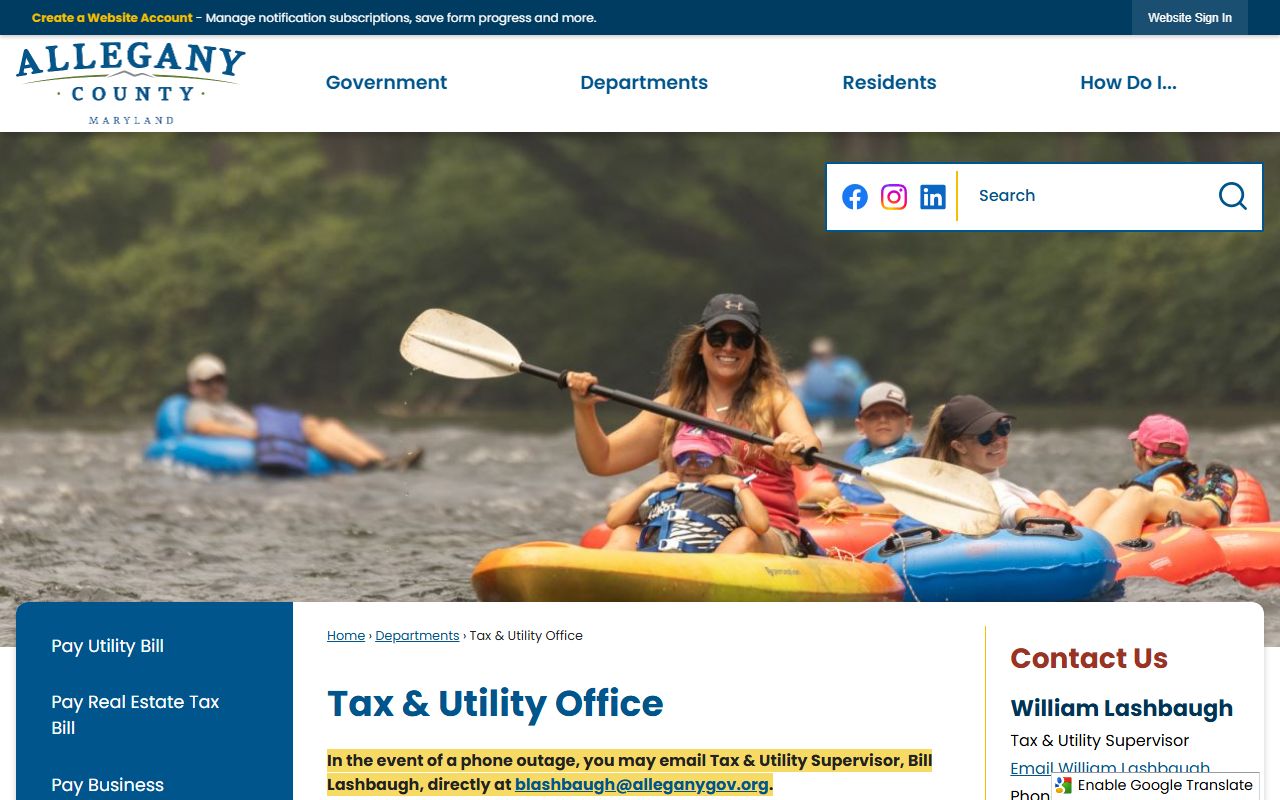
The office collects taxes for Allegany County, the State of Maryland, three municipalities, and 30 special taxing districts, making it a broad resource for any past billing questions.
Allegany County Tax Sale Surplus and Excess Funds
Beyond the standard unclaimed property program, Allegany County runs annual tax lien sales for properties with delinquent taxes. These sales are conducted online through the RealAuction platform. When a tax-delinquent property sells at auction for more than the taxes owed, the former owner may be entitled to claim the surplus funds. This is a separate process from the statewide unclaimed property program, but it can involve significant sums.
Properties at risk of tax sale are published in the Cumberland Times-News for four consecutive weeks before the auction. If your property was ever sold at a tax sale and you believe a surplus was generated, contact the Allegany County Tax & Utility Office directly. For questions about excess funds from a tax sale, the county's Public Information Office can be reached at mtaylor@alleganygov.org.
A surplus funds claim procedure document is available through the county. The Surplus Funds Claim Procedure PDF outlines the steps you need to follow to claim money left over after a tax sale. Read it carefully before submitting any paperwork, as the requirements are specific.
The tax lien sale page gives detail on how the auction process works and what happens to surplus proceeds.
The Allegany County Tax Lien Sale Information page explains the online auction process and the timeline for property owners to act.
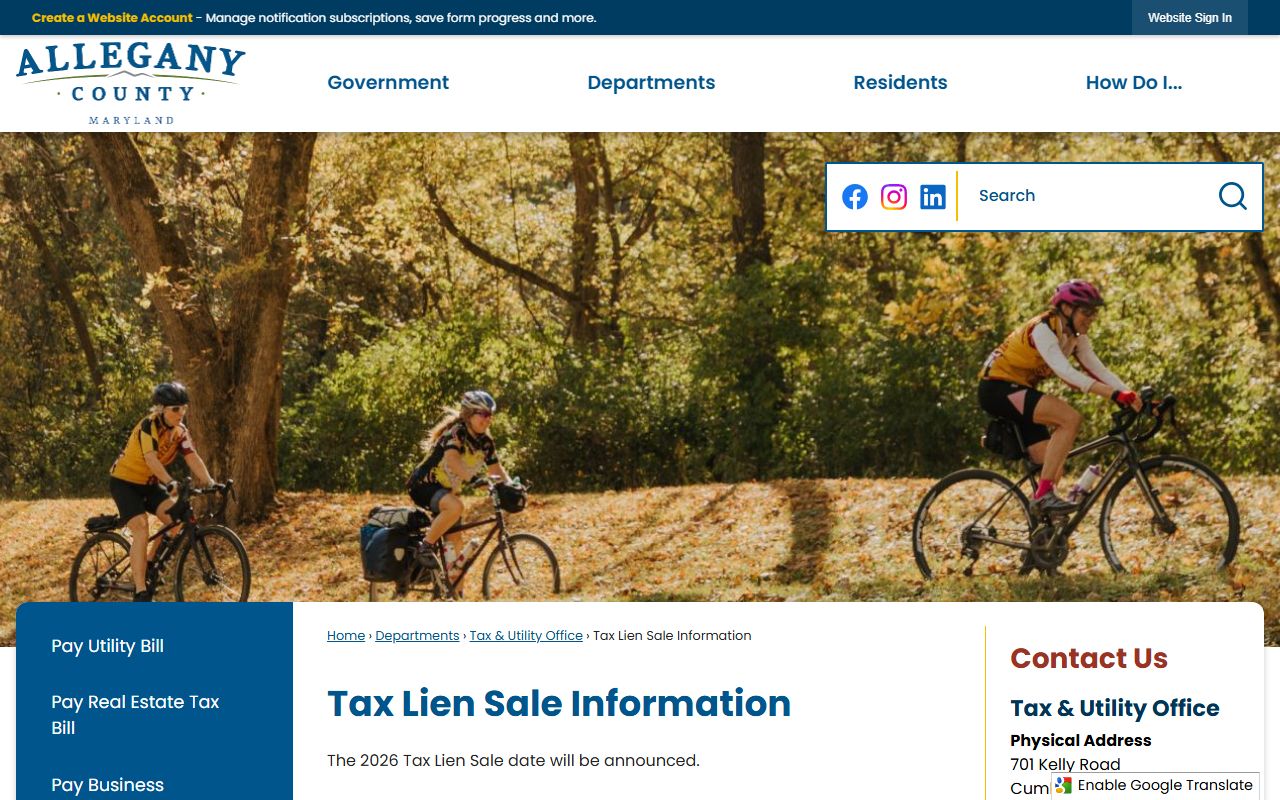
Tax sale surplus claims are separate from standard unclaimed property claims and must follow the county's specific procedure rather than the statewide ClaimItMD process.
Note: If you need to pay outstanding real estate taxes to prevent a sale, the county's online portal at Allegany County Real Estate Tax portal accepts payments directly.
How to File an Allegany County Unclaimed Money Claim
Filing a claim through the state system is a straightforward process. Start at ClaimItMD and search for your name. If you find an account, click to start a claim. You will be asked to provide a few pieces of documentation to prove your identity and your connection to the property.
Required documents typically include a government-issued photo ID, proof of your Social Security number, and a completed COT-ST912 claim form. For claims involving property you owned but which was held in a past address or under a former name, you may also need to provide documentation connecting you to those details, such as a marriage certificate or prior lease agreement.
The screenshot below shows the real estate tax payment portal for Allegany County, which may be relevant if your unclaimed funds relate to a tax overpayment or utility deposit.
The Allegany County Real Estate Tax online portal is the county's self-service system for property tax payments and account review.
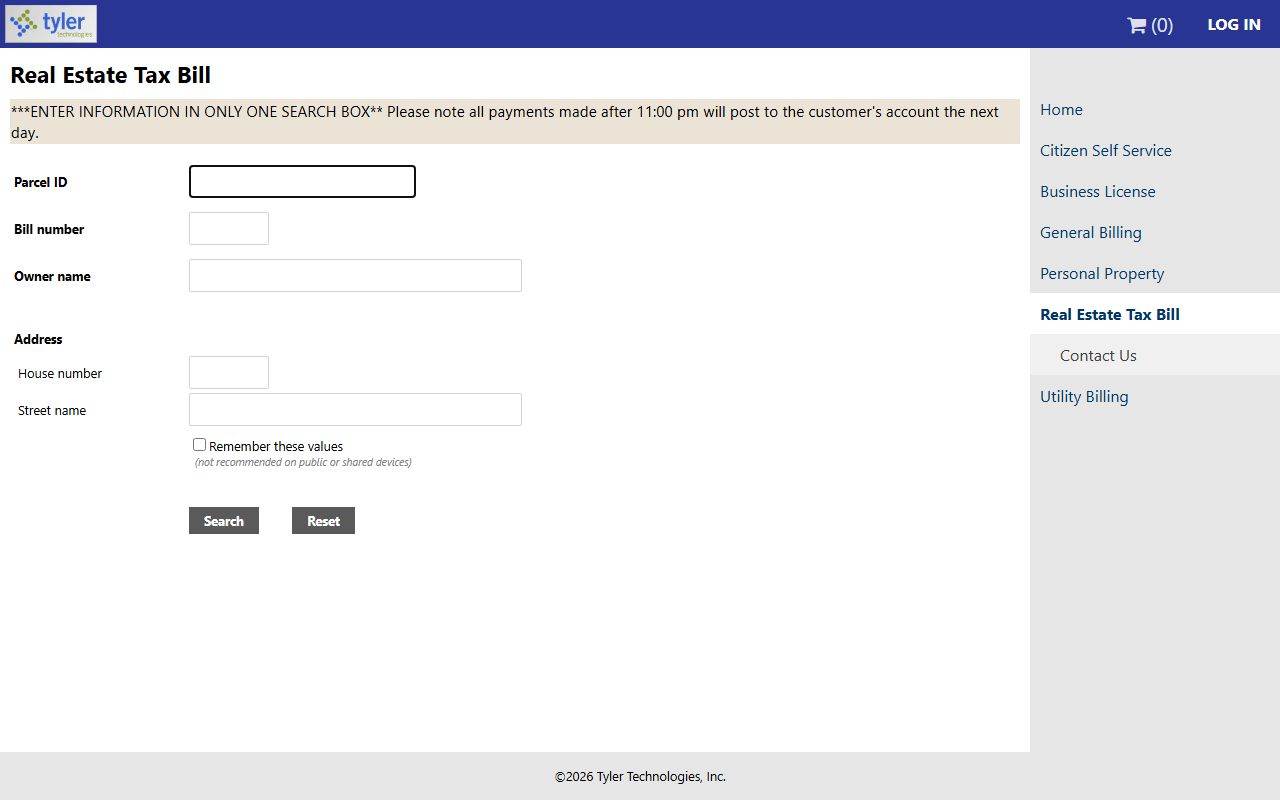
Reviewing your tax payment history here may help you identify overpayments or credits that could have generated unclaimed funds.
Once your claim is submitted online, processing takes roughly 6 to 12 weeks. If you mail in a paper claim instead, expect 12 to 24 weeks. The Comptroller's office can be reached at 410-767-1700 or toll-free at 1-800-782-7383, or by email at unclaim@marylandtaxes.gov. Their mailing address is 7 St. Paul Street, Suite 320, Baltimore, MD 21202. Office hours are Monday through Friday, 8:30 AM to 4:30 PM.
Under Maryland Code §17-401, the state must pay a valid claim within 30 days of approval. There is no deadline to file. Maryland is a custodial state, meaning the Comptroller holds unclaimed funds permanently until the rightful owner comes forward. You can file a claim for funds that have been dormant for decades.
Note: Be cautious of finder services that offer to locate your unclaimed money for a fee. Under Maryland Code §17-404, agreements with finders are void if signed less than 24 months after the property was reported to the state. You can search and claim for free on your own.
What Types of Unclaimed Money Are Common in Allegany County
The types of unclaimed property that show up most often in Allegany County are similar to the rest of Maryland, though the local economy shapes the mix somewhat. Forgotten checking and savings accounts are the most common. Insurance policy proceeds, especially from life insurance, show up frequently as well. Utility deposits from gas and electric providers are another steady source, particularly when people move and forget to request a refund.
Unclaimed wages from former employers also appear regularly. If you left a job in Allegany County and did not cash a final paycheck, that money may have been turned over to the state after three years under the dormancy rules in Maryland Code §17-102. The same applies to security deposits from landlords, though those are less commonly transferred to the state because disputes are handled differently.
Estates that were not fully distributed can also generate unclaimed property. If a family member passed away in Allegany County and part of their estate was not claimed, it may have been turned over to the state. Searching under the name of a deceased relative is allowed, though the claim process requires additional documentation to establish your right to the funds as an heir.
Legal Framework for Unclaimed Property in Maryland
Maryland's unclaimed property program is governed by the Maryland Abandoned Property Act, found in Title 17 of the General Corporations Law. The definitions are in Maryland Code §17-101, which spells out what types of property are covered and who counts as a holder. Reporting requirements for businesses are in Maryland Code §17-301.
The claim process is governed by Maryland Code §17-401. The state is required to pay approved claims promptly. There is no statute of limitations for claimants, which means Allegany County residents can file for funds that were reported to the state years or even decades ago. Maryland courts have consistently upheld the custodial nature of the program, which protects claimants' rights indefinitely.
Nearby Counties
Allegany County borders two other western Maryland counties. If you have lived in any of these areas, you may want to check unclaimed property records there as well. The statewide search covers all of Maryland, but local tax sale surplus funds are handled county by county.